|
|


|
|
|





|
|
|
|
|
|
|
|
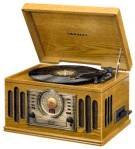 Turntables / Phonographs & Entertainment Centers |
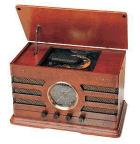 Replicas of Antique Radios & CD Players |
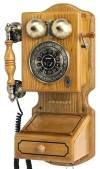 Authentic Old Style Replicas of Antique Telephones |
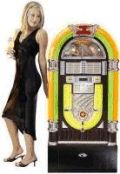 Full Sized Jukeboxes |
 Mini Jukeboxes |
 Old Style Music Boxes |
30 Day Money Back

|
 Old Style Clocks |
We have a 30 day no questions asked money back guarantee on all of our merchandise. We guarantee that your order will be shipped in a timely manner and if your item is not as described or comes damaged, we will refund your money or replace it for you free of charge.
We are always adding new products to our store. We sell many things which are not listed on our web site. If there is anything that you would be interested in that we don't currently have listed, please fee free to contact us and we will let you know if we can get it for you.
The theoretical basis of the propagation of electromagnetic waves was first described in 1873 by James Clerk Maxwell in his paper to the Royal Society A dynamical theory of the electromagnetic field, which followed his work between 1861 and 1865.
In 1878 David E. Hughes was the first to transmit and receive radio waves when he noticed that his induction balance caused noise in the receiver of his homemade telephone. He demonstrated his discovery to the Royal Society in 1880 but was told it was merely induction.
It was Heinrich Rudolf Hertz who, between 1886 and 1888, first validated Maxwell's theory through experiment, demonstrating that radio radiation had all the properties of waves (now called Hertzian waves), and discovering that the electromagnetic equations could be reformulated into a partial differential equation called the wave equation.
The identity of the original inventor of radio, at the time called wireless telegraphy, is contentious. Claims have been made that Nathan Stubblefield invented radio before either Nikola Tesla or Guglielmo Marconi, but his device seems to have worked by induction transmission rather than radio transmission.
In 1893 in St. Louis, Missouri, Tesla made the first public demonstration of radio communication. Addressing the Franklin Institute in Philadelphia and the National Electric Light Association, he described and demonstrated in detail the principles of radio communication. The apparatus that he used contained all the elements that were incorporated into radio systems before the development of the vacuum tube. He initially used magnetic receivers, unlike the coherers used by Marconi and other early experimenters.
In 1894 British physicist Sir Oliver Lodge demonstrated the possibility of signaling using radio waves using a detecting device called a coherer, a tube filled with iron filings which had been invented by Temistocle Calzecchi-Onesti at Fermo in Italy in 1884. Edouard Branly of France and Alexander Popov of Russia later produced improved versions of the coherer. Popov, who was the first to develop a practical communication system based on the coherer, is usually considered by his own countrymen to have been the inventor of radio. The Indian physicist, Jagdish Chandra Bose, demonstrated publicly the use of radio waves in November of 1894 in Calcutta, but he was not interested in patenting his work.
In 1895, Guglielmo Marconi sent a telegraph message without wires, but he didn't send voice over the airwaves; Reginald Fessenden, in 1900, accomplished that and made a weak transmission. On Christmas Eve, 1906, using his heterodyne principle, Reginald Fessenden transmitted the first radio broadcast in history from Brant Rock, Massachusetts. Ships at sea heard a broadcast that included Fessenden playing the song "O Holy Night" on the violin and reading a passage from the Bible.
In 1896 Marconi was awarded what is sometimes recognized as the world's first patent for radio with British Patent 12039, Improvements in transmitting electrical impulses and signals and in apparatus there-for. In 1897 he established the world's first radio station on the Isle of Wight, England. The same year in the U.S., some key developments in radio's early history were created and patented by Tesla. The U.S. Patent Office reversed its decision in 1904, awarding Marconi a patent for the invention of radio, possibly influenced by Marconi's financial backers in the States, who included Thomas Edison and Andrew Carnegie. Some believe this was done to allow the U.S. government to avoid having to pay the royalties that were being claimed by Tesla for use of his patents.
In 1909, Marconi, with Karl Ferdinand Braun, was also awarded the Nobel Prize in Physics for "contributions to the development of wireless telegraphy". However, Tesla's patent (number 645576) was reinstated in 1943 by the U.S. Supreme Court, shortly after his death. This decision was based on the fact that prior art existed before the establishment of Marconi's patent. Some believe the decision was made for financial reasons, to allow the U.S. government to avoid having to pay damages that were being claimed by the Marconi Company for use of its patents during World War I (ignoring the prior art).
Marconi opened the world's first "wireless" factory in Hall Street, Chelmsford, England in 1898, employing around 50 people. Around 1900, Tesla opened the Wardenclyffe Tower facility and advertised services. By 1903, the tower structure neared completion. Various theories exist on how Tesla intended to achieve the goals of this wireless system (reportedly, a 200 kW system). Tesla claimed that Wardenclyffe, as part of a World System of transmitters, would have allowed secure multichannel transceiving of information, universal navigation, time synchronization, and a global location system.
The next great invention was the vacuum tube detector, invented by a team of Westinghouse engineers.
On Christmas Eve, 1906, Reginald Fessenden (using his heterodyne principle) transmitted the first radio audio broadcast in history from Brant Rock, Massachusetts. Ships at sea heard a broadcast that included Fessenden playing O Holy Night on the violin and reading a passage from the Bible. The world's first radio news program was broadcast August 31, 1920 by station 8MK in Detroit, Michigan. The world's first regular wireless broadcasts for entertainment commenced in 1922 from the Marconi Research Centre at Writtle near Chelmsford, England.
The first benefit seen to radio telegraphy was the ability to establish communication between coast radio stations and ships at sea. A company called British Marconi was established to make use of Marconi's and others' patents. This company along with its subsidiary American Marconi, had a stranglehold on ship to shore communication. It operated much the way American Telephone and Telegraph operated until 1983, owning all of its own equipment and refusing to communicate with non-Marconi equipped ships. Many inventions improved the quality of radio, and amateurs experimented with uses of radio, thus the first seeds of broadcasting were planted.
Charles David Herrold, an electronics instructor in San Jose, California constructed the first broadcasting station. It used the spark gap technology, but modulated the carrier frequency with the human voice, and later music. The station "San Jose Calling" (there were no call letters), was first established in April 1909, and has continued an unbroken lineage to eventually become today's KCBS in San Francisco.
Herrold, the son of a Santa Clara Valley farmer, coined the terms "narrowcasting" and "broadcasting", respectively to identify transmissions destined for a single receiver such as that on board a ship, and those transmissions destined for a general audience. The term "broadcasting" had been used in farming to define the tossing of seed in all directions. While Charles Herrold did not claim to be the first to transmit the human voice, he did claim to be the first to conduct "broadcasting". To facilitate the spreading of the radio signal in all directions, he designed omni-directional antennas, which he mounted on the rooftops of various buildings in San Jose.
Herrold also holds the title as the first broadcaster to accept advertising. He exchanged publicity for a local record store for records to play on his station.
Better known than Charles Herrold, Westinghouse in Pittsburgh, Pennsylvania and the Scripps' Detroit News in Detroit, Michigan were mistakenly credited as the first US broadcasters in the early 1920s. Broadcasting was not yet commercially supported; the stations owned by the manufacturers and department stores were established to sell radios and those owned by newspapers to sell newspapers and express the opinions of the owners. Westinghouse was brought into the patent allies group, General Electric, American Telephone and Telegraph, and Radio Corporation of America, and became a part owner of RCA. All radios made by GE and Westinghouse were sold under the RCA label 60% GE and 40% Westinghouse. ATT's Western Electric would build radio transmitters. The patent allies attempted to set up a monopoly, but they failed due to successful competition. Much to the dismay of the patent allies, several of the contracts for inventor's patents held clauses protecting "amateurs" and allowing them to use the patents. Whether the competing manufacturers were really amateurs was ignored by these competitors.
Old-Time Radio (OTR) or the Golden Age of Radio is a term used to refer to radio programs mainly broadcast during the 1920s through the late 1950s. The end of the OTR era was marked by the final CBS broadcasts of Suspense and Yours Truly, Johnny Dollar on September 30, 1962.
Although very little radio comedy-drama currently airs on American radio, it continues at full strength on British and Irish stations, and to a lesser degree in Canada. Regular broadcasts of radio plays are also heard in South Africa, Australia, New Zealand and other countries. In the United States, vintage shows and new audio productions are accessible more on recordings rather than over the air. The audio theatre art form was invented prior to radio, developing in the 1880s and 1890s on early wax recordings. The first examples were recordings of vaudeville sketches, sometimes modified for the medium, but original audio pieces were being created well before Reginald Fessenden first broadcast sound over the radio on Christmas Eve, 1906.
Before the expansion of television in the early 1950s, radio was the most popular home entertainment system across the United States. With the rise of the movie industry, America's appetite for mass entertainment grew. As with films, early radio shows reflected vaudeville origins and usually featured variety shows with music, ethnic humor and often suggestive situations. As the medium matured, sophistication increased. By the mid-1930s radio featured genres and formats popular in other forms of American entertainment -- adventure, comedy, drama, horror, mystery, musical variety, romance, thrillers -- along with farm reports, news, weather, commentary and panel discussion shows.
RCA was formed in 1919 as a publicly-held company owned in part by AT&T; and GE. David Sarnoff was named General Manager. RCA's charter required it be mostly American-owned. RCA took over the assets of American Marconi, and was responsible for marketing GE and Westinghouse's radio equipment. It also acquired the patents of United Fruit and Westinghouse, in exchange for ownership stakes.
In many ways the story of RCA is the story of David Sarnoff. His drive and business acumen led to RCA becoming one of the largest companies in the world, successfully turning it into a conglomerate during their era of their success.
By 1926, RCA had grasped the market for commercial radio, and purchased the WEAF and WCAP radio stations and network from AT&T;, merged them with RCA's own attempt at networking, the WJZ New York/WRC Washington chain, and formed the National Broadcasting Company (NBC).
In 1929, RCA purchased the Victor Talking Machine Company, then the world's largest manufacturer of phonographs (including the famous "Victrola") and phonograph records (in British English, "gramophone records"). The company then became RCA-Victor. With Victor, RCA acquired New World rights to the famous Nipper trademark. RCA Victor produced many radio-phonographs. The company also created new techniques for adding sound to film.
In 1939, RCA demonstrated the first television system at the New York World's Fair. With the introduction of the NTSC standard, the Federal Communications Commission authorized the start of commercial television transmission on July 1, 1941. World War II slowed the deployment of television in the US, but RCA began selling television sets almost immediately after the war was over.
Antitrust concerns led to the breakup of the NBC radio networks by the FCC, a breakup affirmed by the United States Supreme Court. On October 12, 1943, the "NBC Blue" radio network was sold to Life Savers candy magnate Edward J. Noble for $8,000,000, and renamed "The Blue Network, Inc". It would become the American Broadcasting Company (ABC) in 1946. The "NBC Red" network retained the NBC name, and RCA retained ownership.
In 1949, RCA-Victor developed and released the first 45 rpm record to the public, answering CBS/Columbia's 33⅓ rpm "LP".
RCA Video-Tape machineIn 1953, RCA's color-TV standard was adopted as the standard for American color TV. RCA cameras and studio gear, particularly of the TK-40/41 series, became standard equipment at many American television network affiliates. Perhaps surprisingly David Sarnoff commented in 1955, "Television will never be a medium of entertainment".
Today, beautiful replicas of old RCA radios and Victrola phonographs can be found gracing homes and offices everywhere.
These articles are licensed under the "GNU Free Documentation License". They use material from the Wikipedia articles; "Radio", "RCA" and "History_of_radio".
Crosley's idea was a simple one. Design a fully functioning radio, meticulously craft each unit with obsessive detail and precise accuracy, and of course add a measure of consideration for the wallet. Because of his creativity, innovation and ingenuity Crosley was dubbed ‘The Henry Ford of Radio' - and so began Crosley Radio which was to become the world's largest radio manufacturer.
He's most well-known for the mass production and marketing of radios and the creation of WLW - "The Nation's Station" and the 500,000 watt tower he constructed that transmitted FDR's fireside chats. Those signals were reported to have been heard as far away as Australia! By the mid 1900's, he presided over a star-studded radio empire that featured such stars as Rosemary Clooney, Red Skelton, Jack Benny and more.
A true industrialist, Crosley also became known for a multitude of ventures. He was infamous for the Crosley - a miniature-sized automobile, fashioned after the lightweight European cars. The chubby-profiled vehicle promised 50 miles to the gallon and was sold in department stores for just $325. He got involved in many other ventures including the Shelvador refrigerator, the Moonbeam airplane, the first car radio - the Roamio, the Icy-Ball chemical-mechanical ice box and the Go-bi-bi go-kart/stroller, to name a few.
Today, the Crosley philosophy remains virtually unchanged. The Crosley name lives on with superbly detailed replicas that truly transcend time. Reintroductions of original vintage radios and turntables feature the newest technologies graced by unforgettable Crosley stylings. As a leading manufacturer of vintage wares, the Crosley Collection will excite you with completely unexpected treasures featuring pleasantly familiar twists. Their extensive collection of antique replicas are painstakingly rendered after yesterday's old radios, jukeboxes and phonographs we've all come to know and love.
This article uses material by permission of The Crosley Radio Corporation.
The phonograph, or gramophone, was the most common device for playing recorded sound from the 1870s through the 1980s.
Usage of these terms is somewhat different in American English and British English; see usage note below. In more modern usage, this device is often called a turntable or record player. In the late 19th and early 20th century, the alternative term talking machine was sometimes used. The phonograph was the first device for recording and replaying sound.
In more modern usage, this device is called a turntable or record player.
The term phonograph meaning "writing sound", is derived from Greek roots. Similar related terms gramophone and graphophone have similar root meanings.
Arguably, any device used to record sound or reproduce recorded sound could be called a type of "phonograph", but in common practice it has come to mean historic technologies of sound recording.
The earliest known invention of a phonographic recording device was the phonautograph, invented by Leon Scott and patented on March 25, 1857. It could transcribe sound to a visible medium, but had no means to play back the sound after it was recorded. The device consisted of a horn that focused sound waves onto a membrane to which a hog's bristle was attached, causing the bristle to move and enabling it to inscribe a visual medium. Initially, the phonautograph made recordings onto a lamp-blackened glass plate. A later version used a medium of lamp-blackened paper on a drum or cylinder—an arrangement to which Thomas Edison's later invention would bear striking resemblance. Other versions would draw a line representing the sound wave on to a roll of paper. The phonautograph was a laboratory curiosity for the study of acoustics. It was used to determine the vibrations per second for a musical pitch and to study sound and speech; it was not widely understood until after the development of the phonograph that the waveform recorded by the phonautograph was a record of the sound wavelength that needed only a playback mechanism to reproduce the sound.
Patent drawing for Edison's phonograph, 05/18/1880.Thomas Alva Edison announced his invention of the first phonograph, a device for recording and replaying sound, on November 21, 1877 and he demonstrated the device for the first time on November 29 (he patented it on February 19, 1878; US Pat. No. 200,521). Edison's early phonographs recorded on a phonograph cylinder using up-down (vertical) motion of the stylus. Edison's early patents show that he also considered that sound could also be recorded as a spiral on a disc, but Edison concentrated his efforts on cylinders, since the groove on the outside of a rotating cylinder provides a constant velocity to the stylus in the groove, which Edison considered more "scientifically correct". Edison's patent specified that the audio recording was embossed, and it was not until 1889 that engraved recordings were patented by Bell and Tainter.
Emile Berliner invented what he called the Gramophone, another device for recording and replaying sound, and patented it in on November 8, 1887 (US Pat. No 372,786). It recorded on a disk using side-to-side (lateral) motion of the stylus.
In British English "gramophone" came to refer to any sound reproducing machine using disc records, as disc records were popularized in the UK by the Gramophone Company. The term "phonograph" is usually restricted to devices playing cylinder records.
In American English, "phonograph" was the most common generic term for any early sound reproducing machine. Berliner's Gramophone was considered a type of phonograph. "Gramophone" was a brand name, and as such in the same category as "Victrola," "Zon-o-phone," and "Graphonola" referring to specific brands of sound reproducing machines.
The brand "Gramophone" was not used in the USA after 1901, and the word fell out of use there. In contemporary American usage "phonograph" most usually refers to disc record machines or turntables, the most common type of analogue recording from the 1910s on. The word has survived in America based on its nickname form, "Grammy", in the Grammy Awards.
Disc recording is inherently neither better nor worse than cylinder recording in potential audio fidelity.
Recordings made on a cylinder remain at a constant radial velocity for the entirety of the recording, while those made on a disc, have a higher radial velocity at the outer portion of the groove, compared to the inner portion.
Edison's patented recording method recorded with vertical modulations in a groove, Berliner utilized a lateraly modulated groove.
Though Edison's recording technology was better than Berliner's, there were commercial advantages to a disc system:
The disc could be easily mass produced by molding and stamping, and required storage space for a collection of recordings. The heavy cast-iron turntable acted as a flywheel and helped to maintain a consistent rotational velocity. The cylinder machine, lacking this greater rotational inertia, was susceptible to musical pitch fluctuations, and required more mechanical adjustment and maintenance to avoid this impairment. Berliner successfully argued that his technology was different enough from Edison's that he did not need to pay royalties on it, which reduced his business expenses.
Through experimentation, in 1892 Berliner began commercial production of his disc records, and "gramophones" or "talking-machines". His "gramophone record" was the first disc record to be offered to the public. They were five inches (12.7 cm) in diameter and recorded on one side only. Seven-inch (17.8 cm) records followed in 1895. By 1901, ten-inch (25.4 cm) records being sold by the Victor Talking Machine Company, and Berliner had sold his interests. By 1908, double sided disc recorded records became demanded by the public, and cylinders fell into disfavor. Edison felt the commercial pressure for disc records, and by 1912, though reluctant at first, his movement to disc records was in full swing.
From the mid 1890s until the late 1910s both phonograph cylinder and disc recordings and machines to play them on were widely mass marketed and sold. The disc system gradually became more popular due to its cheaper price and better marketing by disc record companies.
From 1900, through the early 1920s, cylinder records, disc records, and machines to play them, were widely mass marketed and sold, and was considered the ultimate in fine home entertainment. Edison ceased cylinder manufacture in the fall of 1929, and the history of disc and cylinder rivalry was concluded; and engraved to disc.
Berliner's lateral disc record was the ancestor of the 78rpm, 45rpm, 33⅓rpm, and all other analogue disc records popular for use in sound recording through the 20th century. See gramophone record and vinyl record.
Christmas 1925 brought improved radio technology and radio sales, and many phonograph dealers to financial ruin. With efforts at improved audio fidelity, the big record companies succeeded in keeping business booming through the end of the decade, but the record sales plummeted during the Great Depression, with many companies merging or going out of business. Booms in record sales returned after World War II.
The "phonograph", "gramophone" or "turntable", remained a common element of home audio systems well after the introduction of other media such as audio tape and even the early years of the compact disc. They were not uncommon in home audio systems into the early 1990s.
The technology of required for a turntable is simple. Most designs use a belt drive or direct drive system. Earlier designs also used an indirect drive system using a rubberized wheel, however, non-linear wear, and decomposition of the wheel introduced noise, and speed variations into the desired audio. These systems generally used a synchronous motor which ran at a speed synchronized to the frequency of the utility supplier. Different speeds were obtained by bringing differing diameter wheels into position between the drive and the platter.
The belt drive improved motor and platter isolation, this noise transfer (usually heard as low frequency rumble) was much reduced. It is difficult to design comprehensive multiple speed synchronous motors, consequently, DC motors, with electronics providing speed control, have gained favor. On the most sophisticated designs, sensors on the platter, are used to ensure the speed of the platter remains locked and absolutely stable. Many platters have a continuous series of reflective markings machined around their edge to provide these pulses. A strobing effect can be observed by the operator to verify rotational speed. Basic DC motors tend to rotate in steps rather than smoothly, this is referred to as 'cogging', and can add noise during playback. Helical armature motors can be used to overcome this.
Direct drive turntables, drive the platter directly, without utilizing intermediate wheels or belts as part of a drive train. The platter functions as a motor armature. This requires good engineering, with advanced electronics for acceleration and speed control. This design and is integrated into some of the finest systems available.
"Turn Tables" or "Turntablism" is not considered by some as a musical instrument, as it is a 'technique' of manipulating music as laid down by artists. However, music may be defined as an 'organized sound', and organized manipulation of sound (music) is still music.
His Master's Voice, often abbreviated to HMV, is a famous trademark in the music business, and for many years was the name of a large record company. The name was coined in 1899 as the title of a painting of the dog Nipper listening to a wind-up gramophone.
The famous trademark image came from a painting originally titled Dog looking at and listening to a Phonograph, and then retitled His Master's Voice. It was painted by British artist Francis Barraud in 1898, based on memories of his dog Nipper. The original version of the painting showed not the disc gramophone familiar in the trademark today, but rather a cylinder phonograph. The dog and phonograph were perched atop a coffin. Presumably the dog was listening to the voice of his deceased owner. (This made more sense with a cylinder phonograph, since at the time they commonly had attachments to make home recordings, whereas the disc gramophone only played back prerecorded sound.)
Barraud failed to sell it to any cylinder phonograph company, but in 1899 was able to sell it to the Gramophone Company under the condition that he modify it to show a disc machine. The Gramophone Company first used the image on publicity material in 1900. At the request of the gramophone's inventor Emile Berliner, the American rights to the picture became owned by the Victor Talking Machine Company.
Victor used the image more aggressively than its U.K. partner, and from 1902 on all Victor records had a simplified drawing of the dog and gramophone from Barraud's painting on their label. Magazine advertisements urged record buyers to "Look for the dog".
In Commonwealth countries, the Gramophone Company did not use this design on its record labels until 1909. The following year the Gramophone Company replaced the Recording Angel trademark in the upper half of the record labels by the famous picture painted by Frances Barraud, commonly referred to as Nipper or The Dog. The Company was never called "HMV" or His Master's Voice, but was identified by that term because of its use of the trademark. Records issued by the Company before February 1908 were generally referred to as "G&Ts;", while those after that date are usually called HMV records.
This image continued to be used as a trademark by Victor in the USA, Canada and Latin America, and then by Victor's successor RCA. In Commonwealth countries (except Canada) it was used by the associated company HMV Records, which was later acquired by EMI. The trademark's ownership is divided between different companies in different countries, reducing its value in the globalised music market. The name HMV is used by a chain of music shops, mainly in the UK, Canada and Japan.
In 1921 the His Master's Voice Company opened the first HMV shop in London. In 1929 RCA bought Victor, and with it a major shareholding in the Gramophone Company which Victor had owned since 1920. In 1931 RCA was instrumental in the creation of EMI, which continued to own the "His Master's Voice" name and image in the UK. In 1935 RCA sold its stake in EMI but continued to own Victor and the American rights to His Master's Voice. World War II fragmented the ownership of the name still further, as RCA Victor's Japanese subsidiary The Victor Company of Japan JVC became independent. Nipper continued to appear on RCA Victor records in America while EMI owned the His Master's Voice label and shops in the UK until the 1980s. The globalised market for CDs pushed EMI into abandoning the HMV label in favor of "EMI Classics", a name they could use worldwide. Meanwhile RCA went into a financial decline; The RCA Victor label (complete with the dog and gramophone image) is now licensed by RCA Records owner BMG-Bertelsmann from trademark owner General Electric, while RCA's consumer electronics business (still promoted by Nipper the dog) is owned by Thomson.
Over the years the HMV label for records was abandoned by EMI, only to be revived in the nineties for Morrissey recordings.
The name HMV is still used by their chain of record shops in the UK, which continued to expand internationally through the 1990s. In 1998 HMV Media was created as a separate company and bought the Waterstone's chain of bookshops, leaving EMI with a 43% stake. In 2002 it floated on the Stock Exchange as HMV Group plc, leaving EMI with only a token holding.
The Victor Talking Machine Company (1901 - 1929) was a United States corporation, the leading American producer of phonographs and phonograph records and one of the leading phonograph companies in the world at the time.
The company was incorporated in Camden, New Jersey in October of 1901 by Eldridge R. Johnson. It was created by merger and reorganization of two existing companies: Emile Berliner's Berliner Gramophone Company, which produced disc records, and Johnson's Consolidated Talking Machine Company, which produced machines for playing disc records. The company was named "The Victor" in honor of legal victories by Johnson and Berliner over Zonophone and others concerning their rights to patents on and distribution of their products.
Victor had the rights in the United States and Latin America to use the famous trademark of the dog Nipper listening to an early disc phonograph. (See also His Master's Voice.)
In 1901, the phonograph cylinder still dominated the market for recorded sound. Disc records and phonographs were widely considered to be little more than toys, for they were cheaper, less reliable and usually of lower audio fidelity than the cylinder records. Johnson embarked on efforts to change these perceptions. He built more reliable spring-wound phonographs out of durable materials and hired engineers to research improved sound for the recordings. Within a few years, Victor was producing records with some of the finest audio fidelity of the era.
After increasing the quality of disc records and phonographs, Johnson began an ambitious project to have the most prestigious singers and musicians of the day record for Victor Records, with exclusive agreements where possible. Often these artists demanded fees which the company could not hope to make up from sale of their records. Johnson shrewdly knew that he would get his money's worth in the long run in promotion of the Victor brand name. Many advertisements were printed mentioning by name the greatest names of music in the era, with the statement that they recorded only for Victor Records. As Johnson intended, much of the public assumed from this that Victor Records must be superior to cylinder records.
The Victor recordings by Enrico Caruso were particularly successful. They were often used by retailers to demonstrate Victor phonographs; Caruso's rich powerful low tenor voice highlighted the best range of audio fidelity of the early audio technology while being minimally affected by its defects. Even people who otherwise never listened to opera often owned a record or two of the great voice of Caruso. Caruso and Victor Records did much to boost each other's commercial popularity.
The origins of country music as we know it today can be traced to two seminal influences and a remarkable coincidence. Jimmie Rodgers and the Carter Family are considered the founders of country music and their songs were first captured at an historic recording session in Bristol, Tennessee on August 1, 1927 where Ralph Peer was the talent scout and sound recordist for Victor Records.
Victrola Model XVI, 1910sIn 1906, Johnson and his engineers designed a new line of phonographs with the turntable and amplifying horn tucked away inside a wooden cabinet. This was not done for reasons of audio fidelity, but for visual aesthetics. The intention was to produce a phonograph that looked less like a piece of machinery and more like a piece of furniture. These internal horn machines, trademarked with the name Victrola, were first marketed to the public in August of that year and were an immediate hit. Soon an extensive line of Victrolas was marketed, ranging from small tabletop models selling for $15, through many sizes and designs of cabinets intended to go with the decor of middle-class homes in the $100 to $250 range, up to $600 Chippendale and Queen Anne-style cabinets of fine wood with gold trim designed to look at home in elegant mansions. Victrolas became by far the most popular brand of home phonograph, and sold in great numbers until the end of the 1920s.
In 1925, Victor switched from the old acoustical or mechanical method of recording sound to the new microphone based electrical system developed by Western Electric. Victor called their version of the improved fidelity recording process "Orthophonic", and sold a line of new designs of phonographs to play these improved records, called "Orthophonic Victrolas". The large top-of- the-line "Credenza" models of Orthophonic Victrolas had a 6 foot long horn coiled inside the cabinet, and are often considered the high point of the development of the commercial wind-up phonograph, offering audio fidelity seldom matched by most home electric phonographs until some 30 years later.
In 1928, Johnson sold his controlling interest in Victor to the banking firm of Siegelman & Spyer, who in 1929 sold to the Radio Corporation of America, which then became known as the Radio-Victor Division of the Radio Corporation of America later RCA Victor.
These articles are licensed under the "GNU Free Documentation License". They use material from the Wikipedia articles; "Phonograph", "His Master's Voice" and "Victor Talking Machine Company".
Coin-operated music boxes and player pianos carved out a place for automatic pay-per-tune music in fairgrounds, amusement parks and other public places (such as train stations in Switzerland) a few decades before the introduction of reliable coin-operated phonographs. Some of these automatic musical instruments were extremely well built and have survived to this day in the hands of collectors and museums. In the long run they could not compete with the jukebox since they played the same instrument (or instruments) over and over again and could not reproduce the human voice.
The immediate ancestor of the jukebox, called the "Coin-slot phonograph", was the first medium of sound recording encountered by the general public, before mass produced home audio equipment became common. Such machines began to be mass produced in 1889, using phonograph cylinders for records. The earliest machines played but a single record (of about 2 minutes of music or entertainment), but soon devices were developed that allowed customers to choose between multiple records. In the 1910s the cylinder was superseded by the gramophone record.
The term "juke box" or "jukebox" came into use in the United States in the 1930s, derived from African-American slang "jook" meaning "dance". Early jukeboxes began to appear in road houses, sometimes called juke or jutte joints. In 1927, the Automatic Music Instrument Company manufactured the first electrically amplified multiple selection phonograph or jukebox. The jukebox could now compete with live music and made it possible for establishments to attract customers by providing high fidelity music anywhere without having to hire a band or orchestra.
Once the depression ended, sales of jukeboxes skyrocketed as the jukebox became more colorful and advanced in its design. The 1946 Wurlitzer model "1015-Bubbler" featured multi-colored lights and bubble tubes which made it the most popular and copied jukebox of all time. The shellac 78rpm record dominated jukeboxes until the Seeburg Corporation introduced an all 45 rpm vinyl record jukebox in 1950. AMI, Rock-Ola, Wurlitzer, and the Seeburg names became synonymous with the word "jukebox" and became the leading manufacturers of jukeboxes. The jukebox became even more popular with teenagers during the 1950's and 1960's as drive-in hamburger stands began popping up all over the country and of course, with the advent of rock and roll music.
Starting in the 1980s, compact discs became the norm for modern jukeboxes. Towards the end of the 20th century several companies started introducing completely digital jukeboxes which did not use CDs, downloading the tunes from a secure signal sent over the Internet or through a separate, proprietary transmission protocol over phone lines. In addition to automatically downloading a potentially larger selection than what is available on CDs in a single machine the digital jukeboxes also send back information on what is being played, and where, opening up new commercial avenues.
Jukeboxes and their ancestors were a very profitable industry from the 1890s on. They were most popular from the 1940s through the mid-1960s, particularly during the 1950s. Today jukeboxes are often associated with early rock and roll music, but were very popular in the swing music era as well. As a result, stores and restaurants with a retro theme, such as the Johnny Rockets chain, include Jukeboxes.
The first Jukeboxes were simply wooden boxes with coin slots and a few buttons. Over time they became more and more decorated, using color lights, chrome, bubble tubes, and other visual gimmicks. Many consider the mid-to-late 1940's the "golden age" of Jukebox styling with the gothic-like curvaceous "electric rainbow cathedral" look. The Wurlitzer model "1015-Bubbler" jukebox typifies the look and is arguably the most popular selling Jukebox model of all time. Many of these survived into the 50's in active use and are instead associated with the 50's in pop culture despite their 40's origin because of their unique visual prominence.
After the 40's, the style generally became more box-like and "high-tech" in look. Also, the newer models needed more panel space for the increased number of record titles they could present on selection buttons, reducing the space available for decoration. This is partly due to improved technology, and the transition from the 78-rpm disks to the 45-rpm disks. The classic 40's look still survives today in many replica jukeboxes.
This article is licensed under the "GNU Free Documentation License". It uses material from the Wikipedia article "Jukebox".
As Professor of Vocal Physiology in the University of Boston, Alexander Graham Bell was engaged in training teachers in the art of instructing deaf mutes how to speak, and experimented with the Leon Scott phonautograph in recording the vibrations of speech. This apparatus consists essentially of a thin membrane vibrated by the voice and carrying a light stylus, which traces an undulatory line on a plate of smoked glass. The line is a graphic representation of the vibrations of the membrane and the waves of sound in the air.
This background prepared him for work with sound and electricity. He began his researches in 1874 with a musical telegraph, in which he employed a make-break circuit driven by a vibrating iron reed which created interrupted current to vibrate the receiver, which consisted of an electro-magnet causing an iron reed or tongue to vibrate, exactly the same as Bourseul, Reis and Gray. One day it was found that a reed failed to respond to the intermittent current. Mr. Bell desired his assistant, who was at the other end of the line, to pluck the reed, thinking it had stuck to the pole of the magnet. Mr. Watson complied, and to his astonishment Bell observed that the corresponding reed at his end of the line there upon began to vibrate and emit the same note, although there was no interrupted current to make it. A few experiments soon showed that his reed had been set in vibration by the magneto-electric currents induced in the line by the mere motion of the distant reed in the neighborhood of its magnet. This discovery led him to discard the battery current altogether and rely upon the magneto-induction currents of the reeds themselves. Moreover, it occurred to him that, since the circuit was never broken, all the complex vibrations of speech might be converted into sympathetic currents, which in turn would reproduce the speech at a distance.
Bell, with his assistant Watson discovered that the movements of the reed alone in a magnetic field could transmit the modulations of the sound. Working from the analogy of the phonautograph, Bell devised a receiver, consisting of a stretched diaphragm or drum of goldbeater's skin with an armature of magnetized iron attached to its middle, and free to vibrate in front of the pole of an electromagnet in circuit with the line.
Alexander Graham Bell's telephone patent drawing, 03/07/1876.This apparatus was completed on June 2, 1875, and the same day he succeeded in transmitting sounds and audible signals by magneto-electric currents and without the aid of a battery. On July 1, 1875, he instructed his assistant to make a second membrane-receiver which could be used with the first, and a few days later they were tried together, one at each end of the line, which ran from a room in the inventor's house at Boston to the cellar underneath. Bell, in the room, held one instrument in his hands, while Watson in the cellar listened at the other. The inventor spoke into his instrument, 'Do you understand what I say?' and we can imagine his delight when Mr. Watson rushed into the room, under the influence of his excitement, and answered, 'Yes.' However, the first successful bi-directional telephone call by Bell wasn't made until March 10, 1876 when Bell spoke into his device, "Mr. Watson, come here, I want to see you." and Watson answered. Thus, by 1875, Bell had re-invented Meucci's electro-magnetic sound powered transmitter. The first long distance telephone call was made on August 10, 1876 by Bell from the family homestead in Brantford, Ontario to his assistant located in Paris, Ontario, some 16 km (10 mi.) distant.
A finished instrument was then made, having a transmitter formed of a double electromagnet, in front of which a membrane, stretched on a ring, carried an oblong piece of soft iron cemented to its middle. A mouthpiece before the diaphragm directed the sounds upon it, and as it vibrated with them, the soft iron 'armature' induced corresponding currents in the cells of the electromagnet. These currents after traversing the line were passed through the receiver, which consisted of a tubular electromagnet, having one end partially closed by a thin circular disc of soft iron fixed at one point to the end of the tube. This receiver bore a resemblance to a cylindrical metal box with thick sides, having a thin iron lid fastened to its mouth by a single screw. When the undulatory current passed through the coil of this magnet, the disc, or armature-lid, was put into vibration and the sounds evolved from it.
The primitive telephone was rapidly improved, the double electromagnet being replaced by a single bar magnet having a small coil or bobbin of fine wire surrounding one pole, in front of which a thin disc of ferrotype is fixed in a circular mouthpiece, and serves as a combined membrane and armature. On speaking into the mouthpiece, the iron diaphragm vibrates with the voice in the magnetic field of the pole, and thereby excites the undulatory currents in the coil, which, after traveling through the wire to the distant place, are received in an identical apparatus. [This form was patented January 30, 1877.] In traversing the coil of the latter they reinforce or weaken the magnetism of the pole, and thus make the disc armature vibrate so as to give out a mimesis of the original voice. The sounds are small and elfin, a minim of speech, and only to be heard when the ear is close to the mouthpiece, but they are remarkably distinct, and, in spite of a disguising twang, due to the fundamental note of the disc itself, it is easy to recognize the speaker.
The apparatus was exhibited at the Centennial Exhibition, Philadelphia, in 1876, where it attracted the attention of Brazilian emperor Pedro II, and at the meeting of the British Association in Glasgow, during the autumn of that year, Sir William Thomson revealed its existence to the European public. In describing his visit to the Exhibition, he went on to say: 'In the Canadian department I heard, "To be or not to be . . . there's the rub," through an electric wire; but, scorning monosyllables, the electric articulation rose to higher flights, and gave me passages taken at random from the New York newspapers: "s.s. Cox has arrived" (I failed to make out the s.s. Cox); "The City of New York," "Senator Morton," "The Senate has resolved to print a thousand extra copies," "The Americans in London have resolved to celebrate the coming Fourth of July!" All this my own ears heard spoken to me with unmistakable distinctness by the then circular disc armature of just such another little electro-magnet as this I hold in my hand.'
To hear the immortal words of Shakespeare uttered by the small inanimate voice which had been given to the world must indeed have been a rare delight to the ardent soul of the great electrician.
The surprise created among the public at large by this unexpected communication will be readily remembered. Except one or two inventors, nobody had ever dreamed of a telegraph that could actually speak, any more than they had ever fancied one that could see or feel; and imagination grew busy in picturing the outcome of it. Since it was practically equivalent to a limitless extension of the vocal powers, the ingenious journalist soon conjured up an infinity of uses for the telephone, and hailed the approaching time when ocean-parted friends would be able to whisper to one another under the roaring billows of the Atlantic. Curiosity, however, was not fully satisfied until Professor Bell, the inventor of the instrument, himself showed it to British audiences, and received the enthusiastic applause of his admiring countrymen.
The later form based on Gray's liquid transmitter was publicly exhibited on May 4, 1877 at a lecture given by Professor Bell in the Boston Music Hall. 'Going to the small telephone box with its slender wire attachments,' says a report, 'Mr. Bell coolly asked, as though addressing some one in an adjoining room, "Mr. Watson, are you ready!" Mr. Watson, five miles away in Somerville, promptly answered in the affirmative, and soon was heard a voice singing "America." [...] Going to another instrument, connected by wire with Providence, forty-three miles distant, Mr. Bell listened a moment, and said, "Signor Brignolli, who is assisting at a concert in Providence Music Hall, will now sing for us." In a moment the cadence of the tenor's voice rose and fell, the sound being faint, sometimes lost, and then again audible. Later, a cornet solo played in Somerville was very distinctly heard. Still later, a three-part song floated over the wire from the Somerville terminus, and Mr. Bell amused his audience exceedingly by exclaiming, "I will switch off the song from one part of the room to another, so that all can hear." At a subsequent lecture in Salem, Massachusetts, communication was established with Boston, eighteen miles distant, and Mr. Watson at the latter place sang "Auld Lang Syne," "The Star-Spangled Banner", and "Hail Columbia," while the audience at Salem joined in the chorus.'
Bell adopted Gray's, and later Edison's resistive transmitters and adapted switching plug boards developed for telegraphy by Western Union. It would be inappropriate to minimize Bell's contribution to the development of telephony. Additionally, Bell succeeded where others failed to assemble a commercially viable telephone system. It can be argued that Bell invented the telephone company.
Bell had overcome the difficulty which baffled Reis, and succeeded in making the undulations of the current fit the vibrations of the voice as a glove will fit the hand. But the articulation, though distinct, was feeble, and it remained for Edison, by inventing the carbon transmitter, and Hughes, by discovering the microphone, to render the telephone the useful and widespread apparatus which we see it now.
The Ericofon was a very futuristic handset when it was introduced in 1956.The modern handset came into existence when a Swedish lineman tied a microphone and earphone to a stick so he could keep a hand free. The folding portable phone was an intentional copy of the fictional futuristic communicators used in the television show Star Trek.
The history of additional inventions and improvements of the electrical telephone includes the carbon microphone (later replaced by the electret microphone now used in almost all telephone transmitters), the manual switchboard, the rotary dial, the automatic telephone exchange, the computerized telephone switch, Touch Tone® dialing (DTMF), and the digitization of sound using different coding techniques including pulse code modulation or PCM (which is also used for .WAV files and compact discs).
Newer systems include IP telephony, ISDN, DSL, cell phone (mobile) systems, digital cell phone systems, cordless telephones, and the third generation cell phone systems that promise to allow high-speed packet data transfer.
The industry divided into telephone equipment manufacturers and telephone network operators (telcos). Operating companies often hold a national monopoly. In the United States, the Bell System was vertically integrated. It fully or partially owned the telephone companies that provided service to about 80% of the telephones in the country and also owned Western Electric, which manufactured or purchased virtually all the equipment and supplies used by the local telephone companies. The Bell System divested itself of the local telephone companies in 1984 in order to settle an antitrust suit brought against it by the United States Department of Justice.
The first transatlantic telephone call was between New York City and London and occurred on January 7, 1927.
This article is licensed under the "GNU Free Documentation License". It uses material from the Wikipedia article "Telephone".
Our extensive collection of Crosley® and RCA® antique replicas are painstakingly rendered after yesterday's old radios, jukeboxes and phonographs we've all come to know and love. Reintroductions of original vintage radios and turntables feature the newest technologies graced by unforgettable stylings.
Superbly crafted vintage reproductions feature the newest technologies graced by the unforgettable styles of yesteryear. From authentic designs to durable construction, each and every unit is given ever-so-distinctive finishing touches like chrome accents, heavy duty hardware, and seven step, hand rubbed furniture-style finishing.
But don't let these vintage styles fool you. They are more than just pretty faces, combining within them, only the latest, high quality components such as AM/FM radios, cassette players, CD players and today's high quality stereo sound from such manufacturers as Sony® and Sanyo®.
Whether you enjoy playing old records & cassettes, CD's, or just listening to the radio, our phonographs, record players and entertainment centers will provide quality entertainment for years to come. Our authentic replicas of old telephones, music boxes and clocks are also carefully crafted to hold to the latest standards of excellence. The quality of the components and workmanship is second to none and the prices can't be beat. These beautiful collectables make great gifts which never go out of style. We think you will be pleasantly surprised!
We strive to supply our customers with the highest quality merchandise at the lowest possible prices. This quality assurance combination of testing certification and recognized brand named quality allows us to confidently offer industry leading warranties on all products.
We are always adding new products to our store. We sell many things which are not listed on our web site. If there is anything that you would be interested in that we don't currently have listed, please feel free to contact us and we will let you know if we can get it for you.
You are welcome to email us with your comments and questions. Let us know how we can help you. Click here to read our spam policy and to report spam. Thank you for visiting and we hope you enjoy shopping at the DCW antique replica store. We hope you will come back and see us again soon.
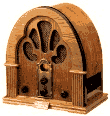
The Cathedral radio, introduced in 1932 is one of the most recognized designs of all antique radios. This classic vintage replica is re-created in handcrafted wood and veneer with a fully illuminated dial scale, authentic woven grill cloth, and a full range speaker with an AM/FM radio and cassette player.
The Mini Harco, based on the word hark meaning to listen, was manufactured in 1921 and was the first truly low priced radio, selling for just $20! This replica of the original nostalgic antique cathedral style radio transcends time making it a handsome addition in any setting. It incorporates an AM/FM radio in a lightweight, portable cabinet. The gothic shape vintage cabinet is finished in handcrafted solid woods and veneers and features an electronically assisted dial scale and woven grill cloth.
The nostalgic RCA Magnolia Cathedral radio / phonograph is a beautiful antique reproduction of the old style vintage cathedral radio. It features an AM/FM radio, a front loading CD player and a 3 speed retractable turntable record player.
Inspired by the antique 1936 version, the Metro and the Metro with CD Player are replicas of the classic wooden bookshelf radio. They feature a wrap around grille opening and a vintage aircraft styled tuning dial in brushed bronze. Constructed of solid hardwood and veneer, the electronics include an AM/FM radio, cassette player and full-range speakers. The CD player, hidden under the hinged top, offers digital display, music search, and a pause feature. Complimented with two 4" full-range speakers.
Console radios grew in popularity in the mid-thirties. The nostalgic 1935 Cathedral Console replica radio combines the classic shape of the popular vintage cathedral radio and the practicality of a table base. The antique style cabinet features an intricately carved grill highlighted by a large round aircraft style-tuning dial. The table base features a handy storage drawer and lower shelf. AM/FM radio with cassette player.
An impressive focal point for your home or office, the nostalgic CR44 and CR44CD full-sized replica consoles are inspired by one of the final giant vintage phonographs manufactured in the 1930's. The antique style Art Deco design of the CR44 vintage phonograph is re-created in solid wood and veneer with a lighted die-cast dial scale, AM/FM radio, cassette deck and a three speed turntable record player discreetly hidden under the hinge top lid. The CR44CD also includes a front loading CD player.
The vintage replica Bluebird and Mini Bluebird radios are perfect replicas of the world's most famous antique style art deco radio. Designed, engineered and crafted by hand, the nostalgic hardwood case permits the ultimate resonance in AM or FM reception with AFC. A real cobalt blue mirror slants back dramatically as originally inspired in 1935. The Bluebird includes an AM/FM radio with a cassette player.
The unique mirrored glass table-top sleigh radio epitomized the classic antique art deco era. The bold artistry and craftsmanship provided eye catching appeal, yet served to accentuate the superb functionality and engineering of this one-of-a-kind radio-typical of products of this period. The nostalgic Crosley Sleigh radio is a faithful reproduction of the vintage Deluxe Model first manufactured in 1936 which featured elaborate etching on the glass cabinet and a rectangular illuminating dial scale. Accentuating the design are five wrap-around chrome bars and three attractive chrome control knobs. A perfect accent piece for the home or office, the antique replica Crosley Sleigh is a must addition to any radio collection. It includes modern day electronics and an AM/FM radio with a CD Player. The top lifts up to reveal the CD player.
The vintage RCA Toaster nostalgic replica clock radio features antique art deco design, an AM/FM radio, a digital clock and a top-loading CD player.
The RCA Victory vintage 40's style replica clock radio features antique art deco design and is constructed with real wood and wood veneer.
The classic replica of the 1950's portable Traveler AM/FM radio with vintage tweed style vinyl and leather handle lets you go anywhere.
The nostalgic 3/4-sized Crosley CD Jukebox is the finest replica of the most famous jukebox ever produced, the vintage 1946 Wurlitzer Model 1015 jukebox. Antique style neon columns produce a rainbow of dazzling colors and bubbles merrily percolate, producing nostalgic hypnotic effects. Updated for our times, the nostalgic CR12-10 jukebox features a state-of-the-art Sanyo 10 CD compact disc changer. (The CR12-3 jukebox contains a 3 CD disc changer.) The Crosley replica jukeboxes are all equipped with an AM/FM radio, 4 speakers, 4 transformers, a full function remote control and a 42-disc storage base. They are thermostatically controlled to keep the internal components cool for hours of endless enjoyment. Each jukebox is individually checked and tested extensively to meet the highest standards of quality workmanship.
The limited edition Elvis Presley Baby Bubbler and the Wurlitzer Mini Bubbler jukeboxes are mini replicas of the famous vintage 1946 Wurlitzer 1015 jukebox and feature antique style percolating bubble tubes complete with enough neon to light a room. Whether you remember them in the ice cream parlor, the drug store, the diner or the cocktail lounge, you're sure to enjoy this stroll down memory lane. These replica mini jukeboxes feature a front-loading compact disc player combined with FM radio and stereo speakers that will leave you all shook up. Add a fully functioning remote control and let the fun begin. Available accessories include vintage external speakers and a beautifully handcrafted hardwood base cabinet.
The vintage replicas, RCA Hollywood and RCA Mini jukeboxes include a 3 CD changer and an AM/FM radio. They feature antique style decorative lights with nostalgic black and metal accents. The window shows the CD's changing. The RCA Hollywood replica jukebox stands 44" high and includes a full function remote.
Get ready to Rock 'n' Roll and enjoy all kinds of music, not just the oldies, with the vintage replica 1947 Mini Jukebox with Cassette and the 1947 Mini Jukebox with CD. The song chart lifts to reveal the dial scale, and panel lights can be turned on or off. Vertical opening CD player is located on the front grill panel. Handcrafted wood and veneer cabinet with AM/FM radio and CD player, internal/external antennas, and full range dynamic speakers.
Roadside diners of America boasted nostalgic countertop jukeboxes like the vintage 1950's Select-O-Matic jukebox which features a state of the art AM/FM radio with cassette player. The lighted song chart has pages that turn and the selection buttons conceal the dial scale. ABS chrome dipped cabinet, high fidelity speaker, internal/external antennas, on/off switch controls panel lights.
Built for durability, the beautiful
Crosley Phonographs, Turntables and
Entertainment Centers combine handsome styling of yesteryear with all of
today's modern conveniences. These stately masterpieces replicate antique originals from the
most prized of collections. Practicality is successfully married with simple,
yet majestic lines. Enjoy music on what will easily become the center of every
family gathering. These self contained record players play 33, 45, & 78 rpm
records.
Crafted with durability in mind, the vintage style cabinets offer a sense of
grandeur while delicate grillwork lends an air of true stylistic approach.
However, true to Crosley tradition, these Entertainment centers are more than
just pretty faces combining AM/FM radios, 3 speed turntables, cassette decks and
CD players.
The defining feature of a good design is that it transcends time. The Conductor antique replica phonograph joins in the ranks of the Crosley vintage collection as one of the most timeless designs ever created. Built for durability, this classic vintage beauty combines handsome styling with all of today's modern conveniences. This nostalgic musical masterpiece features an analog AM/FM radio, 3-speed turntable record player, compact disc player and a side mounted cassette deck.
The nostalgic BandMaster replica phonograph features Crosley's very own vintage Stack-O-Matic technology allowing you to stack up to 6 records in the turntable record player and drop them automatically for continuous play. The analog AM/FM radio is handsomely showcased with an illuminated center dial while a dose of modern-day-technology includes a programmable CD Player with 20-track memory.
The nostalgic RCA Magnolia Cathedral radio / phonograph is a beautiful antique reproduction of the vintage style cathedral radio. It features an AM/FM radio, a front loading CD player and a 3 speed retractable turntable record player.
The nostalgic RCA Lawton and RCA Newport phonographs are beautiful antique reproductions of the old nostalgic RCA Victrola phonograph. The horn and turntable sit atop an octagonal wooden base. These vintage replica Victrolas feature an AM/FM radio, front loading CD player, 3 speed turntable record player and an optional stand. The RCA Newport includes a full function remote control.
An impressive focal point for your home or office, the nostalgic replica of the CR44 and CR44CD full-sized consoles are inspired by one of the final giant vintage phonographs manufactured in the 1930's. The old antique art deco design of the CR44 phonograph is re-created in solid wood and veneer with a lighted die-cast dial scale, AM/FM radio, cassette deck and a three speed turntable record player discreetly hidden under the hinge top lid. The CR44CD also includes a front loading CD player.
The 1940's style CR79CD antique replica phonograph combines digital am/fm radio with front loading CD player, side mounted cassette player / recorder and a 3 speed turntable record player. At last you can make direct recordings to cassette of your favorite CDs, LP albums, or even those rare and valuable vintage 45 rpm or 78 rpm records.
The vintage CR78CD replica phonograph combines digital AM/FM radio with front loading CD player, side mounted cassette player and a 3 speed turntable record player.
Crosley Radio reintroduces the Original Stack-O-Matic turntable Record Changer. Stack-O-Matic technology lets you individually stack up to 6 records on the turntable record player at a time. With a fully automatic swinging motion, as the arm reaches the stack, your next favorite album gracefully drops on the platter. It includes 6 plastic inserts (spindle adaptors) to play 45's.
The vintage Collegiate Stack-O-Matic and Varsity Stack-O-Matic replica turntable record players take you back to the days when listening to records was as easy as stacking them tall and walking away. The nostalgic Collegiate features a supple wood grain finish with black accents and laced with mesh chrome grillwork.
The Traveler Stack-O-Matic portable record player ensured that the Friday night sleepover at Susie's was sure to be a gas because you'd rock and roll to your favorite tunes until the sun came up. And by the end of the 1960's, the oh-so-memorable record changer was basically a staple in every American household.
The vintage AutoRama replica phonograph represents a vintage icon mimicking the clean, streamlined stylings of a classic 1950's automobile. From the sleek illuminated center dial, to the chrome grill side mounted speakers, this beauty takes you back to the days of drive ins and diners. Crosley's fascination with automobiles is evident right down to the last exacting detail. The nostalgic AutoRama phonograph features an AM/FM Radio, a 3-speed turntable record player and enough sophistication to render most enthusiasts speechless. The AutoRama II includes a CD player.
The 1940's era vintage Grand Music Center replica table top phonograph has an antique style illuminated airplane dial with deco face and antique knobs. This nostalgic beauty features a 3 speed turntable record player, AM/FM radio and a side mounted cassette player.
Enjoy music on what will easily become the center of every family gathering. This stately Crosley masterpiece replicates an antique original from the most prized of nostalgic collections. The Broadcaster Turntable vintage phonograph will win the enthusiasm of even the most acute music lovers. Its unfussy practicality is successfully married with simple, yet majestic lines. Crafted with durability in mind, this arts-and-crafts style cabinet offers a sense of grandeur while its delicate grillwork lends an air of true stylistic approach. However, true to Crosley tradition, the Broadcaster is more than just a pretty face combining an AM/FM radio, 3 speed turntable record player and side mounted cassette deck.
The beautiful Empire Turntable antique replica turntable record player has the nostalgic 1940 look of simplicity with its 4 line design throughout its vintage style cabinet.
With Crosley’s antique replica 1930's Decorative Turntable record player you can relive the good old days with all the warmth and enjoyment that only a nostalgic vintage style turntable can provide. Lay the needle gently down and sit back to enjoy your favorite tune come to life complete with the memorable cracks and pops. And as if the incredible sound weren’t enough, Crosley combines intricate scrollwork and a hand woven vintage grill cloth for that added dose of nostalgia. The Decorative Turntable plays all 3 speeds and is sure to delight any music lover.
The vintage style 1930’s Classic Antique Replica Turntable record player is traditionally styled and simplistic in appearance. It combines clean, honest lines with a hint of sophistication. Handcrafted from hardwoods and veneers, the Classic Turntable is pure, quality craftsmanship at it finest. It features a seven-step furniture-style finishing process that brings it glistening to life with a high gloss shine. Whether your choice is a 33 1/3, a 45 or a 78, all three speeds are beautifully accommodated on this nostalgic Classic Turntable. Listening to your vinyls has never been this much fun, from the first to the thousandth time you pick up that arm and gently lay the needle in the groove. When the music begins to crackle and hum, you’ll be reminded of how impressive turntable sound can be.
The vintage style 1940's Classic Antique Replica Turntable record player is hand crafted in oak or cherry. This nostalgic turntable features a hinged top for easy access. Matching stands are available for this model.
The handcrafted wood Entertainment Stands proudly display your favorite Crosley® or RCA® phonograph or turntable record player in any setting. Constructed of hardwoods and veneers, the stands feature storage shelves perfect for storage of your complete record collection.
The Phonograph Cleaning Kit, Replacement Needles and 45 RPM Record Inserts make excellent accessories for the phonographs, turntables, record players and Stack-O-Matics shown above.
The colonial style Country Kitchen Phones are authentic reproductions of early American heritage. While these beautiful recreations are designed to provide extremely high quality communications, they have all the charm of the faithful originals. Originally introduced in the early 1920's, this vintage telephone features a crank handle that actually turns. The Crosley Country Kitchen Phone II features touch-tone buttons with a rotary look, complete with speaker and hold/mute functions. The handcrafted wood and veneer cabinet is enhanced with striking brushed bronze-plated hardware. These nostalgic telephones are as functional as they are fabulous as they include a pull out storage compartment, volume controls for ringer and receiver and the option to change between tone/pulse.
The beautiful antique replica of the vintage French Style Porcelain Phone will provide a touch of classic elegance to any room. The base and handset of these beautiful telephones are porcelain accented with gold and delicate flower patterns. The gold accented rotary fashion plate has a modern pushbutton keypad. It includes a tone/pulse switch, ringer volume control and redial.
The antique Candlestick Phone, also known as the Upright initially became popular during the early 1900s before the introduction of the one-piece handset. The first Candlestick telephones were introduced when the magneto system was in use, which meant that the phone was connected to a large wooden box called a subset containing a battery, bell, and crank. But oh have we come a long way. From its bell-shaped mouthpiece to its cloth covered receiver cord, this antique telephone replica recalls a vintage instrument from the 1900's. But a closer look reveals some modern technology including a decorative dial that functions as a push button for tone/pulse operation as well as a center medallion that serves as a redial button. This modern day version of the nostalgic Candlestick telephone would have surely made Alexander Graham Bell proud.
The Crosley authentically styled CR689 Eiffel Tower phone is an exact replica of the nostalgic vintage Eiffel Tower telephone created in Stockholm Sweden by L. M. Ericsson from 1892 to 1929. This phone would be a great addition to any room. Black with antique brass accents, it features a dark charcoal bakelite-like body, a classic felted handset cord and a magneto crank that really works.
The Sultan Phone and the Capitol Phone are both beautiful replicas of the vintage 1920's European design telephone and are constructed of solid woods and veneers with a cherry finish. These nostalgic phones are elegantly designed with nickeled brass hardware, a wood hand piece and 44" cloth cord. They feature a rotary look dial with a modern pushbutton keypad, and tone/pulse switch with ringer volume control. They plug into standard US phone jacks.
The classic vintage 1950's Model Pay Phone replica will take you back to the days of old fashioned phone booths and five-cent calls. Drop in a coin and you'll hear the original brass jingle, and the push-buttons even have an authentic rotary look. This authentic vintage replica telephone is wall or desk mountable with a heavy-duty ABS plastic cabinet, chrome accents, full featured coin bank with lock and key, ringer control and tone/pulse switch.
The vintage 302 Series Telephone was introduced in 1937 and was the first in the vintage collection to incorporate the bell in the base of the unit. Originally cast in metal, this telephone was later produced using a heavy-duty plastic housing. The retro-style appearance is combined with a rugged construction earning it the nick-name The Cow's Hoof because of its lipped hoof-style base. Henry Dreyfuss, considered a brilliant industrial designer, worked with Bell Telephone Laboratories designing telephones that were sensitive to consumers' desire to suit a variety of home environments. Well known for the 302 Style Desk Phone, he later shifted his design efforts to include the 302 Series Wall Phone allowing consumers to walk with the phone while cradling it on their shoulder. This unified and balanced form replaced the awkward and ungainly shapes of earlier models. Whether for its beauty or its brawn, the Crosley 302 replica is surely a conversation piece in any setting.
The Princess Phone, introduced in 1959, was compact and attractive. Featured in a variety or colors, including pastels, this vintage telephone had a smaller footprint to fit in those not-so-big spaces. With it's rounded edges, sleek lines and fashionable stylings, it quickly became a favorite. This cute little replica princess phone is sure to make a big impression.
First introduced in 1949, the ever popular vintage 500 Series Desk Phone was initially featured in basic Bell Black. Reintroduced in 1954, in a variety of shades, this classic telephone gained widespread popularity as it became a decorative household item. Telephones return to the wall in the 1956 classic companion to the desk style phone. Designed for convenience, the 500 Series Wall Phone was most often found in kitchens where tabletop space was at a premium. It also became popular in such areas as the basement, covered patio and garage.
The beautifully handcrafted wooden Animated Dancing Ballroom Antique Replica Music Box contains four vintage styled figurines that pirouette elegantly around a nostalgic ballroom dance floor. A soft back light shines down on the figures as they merrily spin while real music box music plays. Select from 8 holiday and 8 all time classics and watch as the figurines dance around the lighted ballroom. A glass-enclosed top allows you to view the inner workings of the authentic disc player.
The Replacement Disc Sets are perfect accessories for the antique replica Dancing Ballroom Music Box. Made of gold resin, and decorated in vintage ornamental, lithograph–style renderings, these nostalgic sets of eight tunes are sure to enhance your current collection. Available disc sets include Christmas, Popular and Movies & Musicals tunes.
The Leipzig, Munchen, Stuttgart and Saxony antique replica music boxes are historic vintage 1800's replicas, handcrafted in oak cabinets with cherry veneer finishes. Each nostalgic music box features a 22 note musical movement and comes with 6 discs which play holiday and classic tunes.
Celebrate the spirit of the season with the nostalgic Crosley's White Christmas Music Box. This decorative antique replica holiday style music box features a glass-topped lid that when opened, brings the merry vintage style ice skaters to life. It plays 30 tunes with 15 holiday and 15 all time classics, as the figurines gracefully maneuver on the miniature pond scene.
The decorative vintage holiday style antique replica Carousel Music Box features a glass-topped lid that when opened, merrily brings the carousel spinning to life. This nostalgic winter wonderland scene is sure to rekindle your fondest holiday memories. It plays 30 tunes with 15 holiday and 15 all time classics, as the figurines gracefully maneuver in this miniature version of a classic carousel scene.
The nostalgic antique replica cherry cabinet Clock Mantel Music Box features the ultimate in vintage music box fashion. A hinged glass door opens to reveal a decorative gold face clock with roman numerals. Turn the music on or off with the flip of a switch or should you choose, have it chime every hour on the hour. Decorative metal tune discs come complete with ornamental lithograph renderings just like the originals. Plays 10 tunes, 5 holiday and 5 all time classics, as the figurines gracefully twirl in place.
The simply elegant antique replica Xylophone Music Box needs no more decoration than the beautiful walnut grain, hand rubbed to a beautiful satin finish. However, handmade in vintage style old-world tradition, it expertly captures a realistic xylophone movement. As the ballet dancers rise up and twirl gracefully when the lid opens, the keys merrily strike out a beautiful collection of 25 holiday tunes and 25 all time classics.
The vintage antique style replica Kassel 31 day Wall Grandfather Clocks feature beautifully crafted solid Linden wood with a glass front that reveals the swinging pendulum inside. The Clock chimes the hour (5 times at 5 o'clock, etc.) and once on the half hour. The pendulum length adjusts to make the clock run faster or slower. These beautiful wall clocks could easily become a family heirloom that can be enjoyed for years to come. Included is a winding key.
The nostalgic antique replica cherry cabinet Clock Mantel Music Box features the ultimate in vintage music box fashion. A hinged glass door opens to reveal a decorative gold face clock with roman numerals. Turn the music on or off with the flip of a switch or should you choose, have it chime every hour on the hour. Decorative metal tune discs come complete with ornamental lithograph renderings just like the originals. Plays 10 tunes, 5 holiday and 5 all time classics, as the figurines gracefully twirl in place.
Enjoy a hint of the Black Forest with the original antique style Kassel Black Forest Cuckoo Clock adorned with flora and fauna from the forests. This beautiful vintage replica cuckoo clock is made in Germany and features intricate carvings and Roman numerals on its face. The cuckoo comes out each hour to announce the time with his famous sound. This clock is wound by pulling the round ring on the end of the chain down and raising the pine cone weight up to the wood clock.
The beautifully crafted 31 day vintage Grandfather Clocks by Kassel and Edward Meyer show all the love and attention given to fine furniture by craftsmen who take pride in their work. These antique style replica grandfather clocks are hand crafted in solid Linden wood with a glass front. The pendulum swings and the clock chimes each hour and once on the half hour. The pendulum length adjusts to make the clock run faster or slower. The decorative weights have been added to enhance the overall beauty. Each clock comes with a winding key and instruction booklet.

|
|
|
|
|
||||||
| Copyright © 2005 DCW Store. All rights reserved. | ||||||
| Privacy Policy Security Resources |