|
|
|
|
|
|
|
|
|
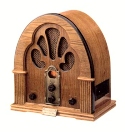
The nostalgic Cathedral radio introduced in 1932 is one of the most recognized designs of all antique radios. This classic vintage old style replica is re-created in handcrafted wood and veneer with a fully illuminated dial scale, authentic woven grill cloth, and a full range speaker with an AM/FM and cassette player. 90 Day limited warranty. UL listed. Item # CR32 Free Shipping in the Continental USA! $83.99 |
 Click for larger view |
|
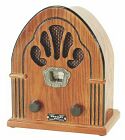
The Mini Harco vintage radios, based on the word hark meaning to listen, were manufactured in 1921. They were the first truly low priced radio, selling for just $20! This replica of the nostalgic old antique cathedral style radio transcends time making it a handsome addition in any setting. It incorporates an AM/FM radio in a lightweight, portable cabinet. The gothic shape cabinet is finished in handcrafted solid woods and veneers and features an electronically assisted dial scale and woven grill cloth.
Radio Features:
Item # CR82 Free Shipping in the Continental USA! $39.99 |
 Click for larger view |
|
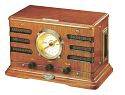
Inspired by the old vintage 1936 metro style radios, the nostalgic Metro is a replica of the classic wooden bookshelf radio. It features a wrap around grille opening and a antique style aircraft styled tuning dial in brushed bronze. Constructed of solid hardwood and veneer, the electronics include an AM/FM radio, cassette player and full-range speakers. 90 Day limited warranty. UL listed. Item # CR19 Free Shipping in the Continental USA! $83.99 |
 Click for larger view |
|
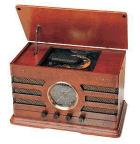
Metro Radio with CD Player. The antique old style CR19CD Metro radio replica features handcrafted wood and veneer construction, in addition to the little touches that make this vintage radio the perfect nostalgic accent for any home or office. These beautiful radios feature an illuminated airplane dial scale, hand-woven grill cloth, brass hardware, and smooth hand-rubbed finish. The AM/FM stereo radio with Automatic Frequency Control features both internal and external antennas. The CD player, hidden under the hinged top, offers digital display, music search, and a pause feature. Complimented with two 4" full-range speakers. 90 Day limited warranty. UL listed. Item # CR19CD Free Shipping in the Continental USA! $139.99 |
 Click for larger view |
|
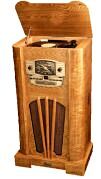
An impressive focal point for your home or office, this antique style replica of the full-sized console radio / phonograph is inspired by one of the final giants manufactured in the 1930's. Grand in appearance, and handsome in design, this nostalgic vintage replica Console is handcrafted in solid hardwoods and veneers with 1930's art deco design. The CR44CD vintage replica radio / phonograph features a lighted die cast dial scale, AM/FM radio, cassette deck, front loading CD player and a three speed turntable record player discreetly hidden under the hinge top lid.
Item # CR44CD Free Shipping in the Continental USA! $399.99 |
 Click for larger view New |
|
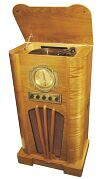
An impressive focal point for your home or office, this antique style replica of the full-sized console radio / phonograph is inspired by one of the final giants manufactured in the 1930's. Grand in appearance, and handsome in design, this nostalgic vintage replica Console is handcrafted in solid hardwoods and veneers with 1930's art deco design. The CR44 vintage replica radio / phonograph features a lighted die cast dial scale, AM/FM radio, cassette deck and a three speed turntable record player discreetly hidden under the hinge top lid. This model is similar to the CR44CD shown above, but does not include a CD player.
Item # CR44 Free Shipping in the Continental USA! $299.99 |
 Click for larger view New |
|
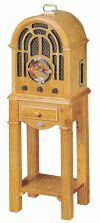
Console radios grew in popularity in the mid-thirties. The nostalgic 1935 Cathedral console replica radio combines the classic shape of the old popular vintage cathedral radio and the practicality of a table base. The antique style cabinet features an intricately carved grill highlighted by a large round aircraft style-tuning dial. The table base features a handy storage drawer and lower shelf, AM/FM radio with cassette player. 90 Day limited warranty. UL listed. Item # CR35 Free Shipping in the Continental USA! $129.99 |
 Click for larger view |
|
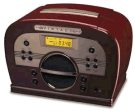
These nostalgic RCA vintage replica toaster clock radios feature old antique style art deco design, AM/FM radio, digital clock and a top-loading CD player.
Item # RCA-TOASTER-CD Free Shipping in the Continental USA! $109.99 |
 Click for larger view New |
|
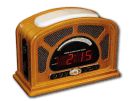
These vintage RCA 40's style replica clock radios feature nostalgic antique old style art deco design, AM/FM radio and real wood and wood veneer construction.
Item # RCA-VICTORY Free Shipping in the Continental USA! $55.99 |
 Click for larger view New |
|
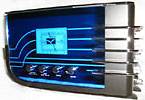
This unique mirrored glass table-top radio epitomized the classic antique style art deco era. The bold artistry and craftsmanship provided eye catching appeal, yet served to accentuate the superb functionality and engineering of these one-of-a-kind radios typical of products of this period. The nostalgic Sleigh radio / CD player is a faithful reproduction of the Deluxe Model first manufactured in 1936 which featured elaborate etching on the glass cabinet and a rectangular illuminating dial scale. Accentuating the design are five wrap-around chrome bars and four attractive chrome control knobs. A perfect accent piece for the home or office, the vintage Sleigh replica is a must addition to any radio collection. Includes modern day electronics and an AM/FM radio with CD Player. The top lifts up to reveal the CD player. Item # CR38CD Free Shipping in the Continental USA! $139.99 |
 Click for larger view |
|
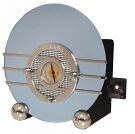
The CR37 radios are the perfect replica of the world's most famous old vintage style art
deco radio. This beautiful nostalgic antique re-creation is designed, engineered and
crafted by hand. The hardwood case permits the ultimate resonance in AM or FM reception
with AFC. The real cobalt blue mirror slants back dramatically as originally inspired in 1935.
Included is an AM/FM radio and cassette player.
Item # CR37 Free Shipping in the Continental USA! $99.99 |
 Click for larger view |
|
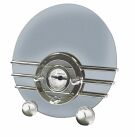
Mini-version of the CR37 1930's Blue Bird radio, this vintage style replica is one of the most celebrated old style Art Deco radios ever produced. This exceptional nostalgic antique re-creation is designed, engineered, and crafted by hand. The 8" diameter cobalt blue mirror slants back as originally inspired and is accentuated by chrome feet and three horizontal accent bars. AM/FM radio only. Item # CR81 Free Shipping in the Continental USA! $65.99 |
 Click for larger view |
|
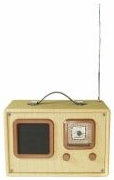
This classic antique style replica of the 1950's vintage portable AM/FM radio with vintage tweed style vinyl and leather handle. These nostalgic old radios let you go anywhere.
Item # CR21 Free Shipping in the Continental USA! $75.99 |
 Click for larger view |
Old-Time Radio (OTR) or the Golden Age of Radio is a term used to refer to radio programs mainly broadcast during the 1920s through the late 1950s. The end of the OTR era was marked by the final CBS broadcasts of Suspense and Yours Truly, Johnny Dollar on September 30, 1962.
Although very little radio comedy-drama currently airs on American radio, it continues at full strength on British and Irish stations, and to a lesser degree in Canada. Regular broadcasts of radio plays are also heard in South Africa, Australia, New Zealand and other countries. In the United States, vintage shows and new audio productions are accessible more on recordings rather than over the air. The audio theatre art form was invented prior to radio, developing in the 1880s and 1890s on early wax recordings. The first examples were recordings of vaudeville sketches, sometimes modified for the medium, but original audio pieces were being created well before Reginald Fessenden first broadcast sound over the radio on Christmas Eve, 1906.
Before the expansion of television in the early 1950s, radio was the most popular home entertainment system across the United States. With the rise of the movie industry, America's appetite for mass entertainment grew. As with films, early radio shows reflected vaudeville origins and usually featured variety shows with music, ethnic humor and often suggestive situations. As the medium matured, sophistication increased. By the mid-1930s radio featured genres and formats popular in other forms of American entertainment -- adventure, comedy, drama, horror, mystery, musical variety, romance, thrillers -- along with farm reports, news, weather, commentary and panel discussion shows.
Top comedy talents surfed the airwaves for many years: Fred Allen, Jack Benny, Victor Borge, Fanny Brice. Bob Burns, Bob Hope, Groucho Marx, Red Skelton and Ed Wynn. More laughter was generated by such shows as Abbott and Costello, Amos 'n' Andy, Burns and Allen, Ethel and Albert, Fibber McGee and Molly, The Great Gildersleeve and The Halls of Ivy. Radio comedy ran the gamut from the country humor of Lum and Abner and Minnie Pearl to the dialect characterizations of Mel Blanc and the caustic sarcasm of Henry Morgan. Gags galore were delivered weekly on Stop Me If You've Heard This One and Can You Top This?, panel programs devoted to the art of telling jokes. Quiz shows were lampooned on It Pays to Be Ignorant, and other memorable parodies were presented by such satirists as Spike Jones, Stoopnagle and Budd, Stan Freberg and Bob and Ray.
Some shows originated as stage productions: Clifford Goldsmith's play What a Life was reworked into NBC's popular, long-run The Aldrich Family (1939-1953) with the familiar catchphrase, "Coming, Mother!" Moss Hart and George S. Kaufman's Pulitzer Prize-winning Broadway hit, You Can't Take It with You (1936), became a weekly situation comedy heard on Mutual (1944) with Everett Sloane and later on NBC (1951) with Walter Brennan.
Other shows were adapted from comic strips, such as Blondie, The Gumps, Li'l Abner, Little Orphan Annie, Popeye the Sailor, Red Ryder, Reg'lar Fellers, Terry and the Pirates and Tillie the Toiler. Bob Montana's redheaded teen of comic strips and comic books was heard on radio's Archie Andrews from 1943 to 1953. The Timid Soul was a 1941-1942 comedy based on cartoonist H.T. Webster's famed Casper Milquetoast character.
The Lux Radio Theater offered adaptations of Hollywood movies, performed before a live audience, often with cast members from the original films. Suspense, Escape, The Mysterious Traveler, Inner Sanctum were popular thriller anthology series. Leading writers who created original material for radio included Norman Corwin, Archibald MacLeish, Arthur Miller, Arch Oboler, Rod Serling and Irwin Shaw.
Most American radio network programs were presented live, and they were often re-performed for listeners in Western time zones. Network policy did not permit the broadcast of recorded programming during most of the OTR era. For a variety of reasons, however, many programs were recorded as they were broadcast. In some cases, the recording was made at the point of origination (usually network studios in New York, Chicago, or Los Angeles). In other cases, it was made at an affiliate station. For example, a program originating at CBS in New York might be recorded off the network circuit at WJSV in Washington. A relatively few surviving programs were recorded off the air ("airchecks"), usually at a recording studio, since home recording equipment was uncommon during the OTR era. Before magnetic tape came into use in the early 1950s, the format was normally 16-inch diameter "transcription disks" (also known as ETs, for "electrical transcription"). Most of the OTR programs in circulation among collectors – whether on tape, CD or MP3 – originated with these ETs.
During part of the OTR era, the Armed Forces Radio Service (later Armed Forces Radio and Television Service) obtained copies of network radio entertainment programming for distribution to AFRS radio stations serving U.S. troops overseas. The programs were edited to delete commercials, and disks were pressed for shipment to stations. Many OTR shows have survived only in the edited AFRS version. (Some exist in both original and AFRS formats.)
A relatively small number of surviving series were recorded for syndication. These programs were typically distributed to stations on transcription disk, and the station would then play the program on the air at their convenience. Like syndicated television programming today, different stations played the programs at different days and times.
Vintage radio is fondly remembered by most Americans of the right age for at least a few trademark sounds, phrases and events: the famous broadcast of The War of the Worlds by Orson Welles' Mercury Theater on the Air; the creaking-door sound effect which framed each episode of Inner Sanctum; Jack Benny's famous call for "Rochester" (and the famous answers of Eddie Anderson; the clipped speech of Jack Webb on Dragnet; the "Hi-Yo, Silver!"call of the Lone Ranger; the cackle of The Shadow: "Who knows what evil lurks in the hearts of men? The Shadow knows..."
RCA was formed in 1919 as a publicly-held company owned in part by AT&T; and GE. David Sarnoff was named General Manager. RCA's charter required it be mostly American-owned. RCA took over the assets of American Marconi, and was responsible for marketing GE and Westinghouse's radio equipment. It also acquired the patents of United Fruit and Westinghouse, in exchange for ownership stakes.
In many ways the story of RCA is the story of David Sarnoff. His drive and business acumen led to RCA becoming one of the largest companies in the world, successfully turning it into a conglomerate during their era of their success.
By 1926, RCA had grasped the market for commercial radio, and purchased the WEAF and WCAP radio stations and network from AT&T;, merged them with RCA's own attempt at networking, the WJZ New York/WRC Washington chain, and formed the National Broadcasting Company (NBC).
In 1929, RCA purchased the Victor Talking Machine Company, then the world's largest manufacturer of phonographs (including the famous "Victrola") and phonograph records (in British English, "gramophone records"). The company then became RCA-Victor. With Victor, RCA acquired New World rights to the famous Nipper trademark. RCA Victor produced many radio-phonographs. The company also created new techniques for adding sound to film.
In 1939, RCA demonstrated the first television system at the New York World's Fair. With the introduction of the NTSC standard, the Federal Communications Commission authorized the start of commmercial television transmission on July 1, 1941. World War II slowed the deployment of television in the US, but RCA began selling television sets almost immediately after the war was over.
Antitrust concerns led to the breakup of the NBC radio networks by the FCC, a breakup affirmed by the United States Supreme Court. On October 12, 1943, the "NBC Blue" radio network was sold to Life Savers candy magnate Edward J. Noble for $8,000,000, and renamed "The Blue Network, Inc". It would become the American Broadcasting Company (ABC) in 1946. The "NBC Red" network retained the NBC name, and RCA retained ownership.
In 1949, RCA-Victor developed and released the first 45 rpm record to the public, answering CBS/Columbia's 33⅓ rpm "LP".
RCA Video-Tape machineIn 1953, RCA's color-TV standard was adopted as the standard for American color TV. RCA cameras and studio gear, particularly of the TK-40/41 series, became standard equipment at many American television network affiliates. Perhaps surprisingly David Sarnoff commented in 1955, "Television will never be a medium of entertainment".
Today, beautiful replicas of old RCA radios and Victrola phonographs can be found gracing homes and offices everywhere.
These articles are licensed under the "GNU Free Documentation License". They use material from the Wikipedia articles; "RCA" and "Old-time_radio".
Crosley's idea was a simple one. Design a fully functioning radio, meticulously craft each unit with obsessive detail and precise accuracy, and of course add a measure of consideration for the wallet. Because of his creativity, innovation and ingenuity Crosley was dubbed ‘The Henry Ford of Radio' - and so began Crosley Radio which was to become the world's largest radio manufacturer.
He's most well-known for the mass production and marketing of radios and the creation of WLW - "The Nation's Station" and the 500,000 watt tower he constructed that transmitted FDR's fireside chats. Those signals were reported to have been heard as far away as Australia! By the mid 1900's, he presided over a star-studded radio empire that featured such stars as Rosemary Clooney, Red Skelton, Jack Benny and more.
A true industrialist, Crosley also became known for a multitude of ventures. He was infamous for the Crosley - a miniature-sized automobile, fashioned after the lightweight European cars. The chubby-profiled vehicle promised 50 miles to the gallon and was sold in department stores for just $325. He got involved in many other ventures including the Shelvador refrigerator, the Moonbeam airplane, the first car radio - the Roamio, the Icy-Ball chemical-mechanical ice box and the Go-bi-bi go-kart/stroller, to name a few.
Today, the Crosley philosophy remains virtually unchanged. The Crosley name lives on with superbly detailed replicas that truly transcend time. Reintroductions of original vintage radios and turntables feature the newest technologies graced by unforgettable Crosley stylings. As a leading manufacturer of vintage wares, the Crosley Collection will excite you with completely unexpected treasures featuring pleasantly familiar twists. Their extensive collection of antique replicas are painstakingly rendered after yesterday's old radios, jukeboxes and phonographs we've all come to know and love.
This article uses material by permission of The Crosley Radio Corporation.

|
|
|
|
|
||||||
| Copyright © 2005 DCW Store. All rights reserved. | ||||||
| Privacy Policy Security Resources |